

Specifiers rarely struggle to choose a form. The difficulty with a custom chandelier is locking down the decisions that affect structure, wiring, maintenance and freight long before the first sample is made. The most common failures occur in the gap between the concept render and the builder’s drawing.
Fix the Structural Assumptions Early
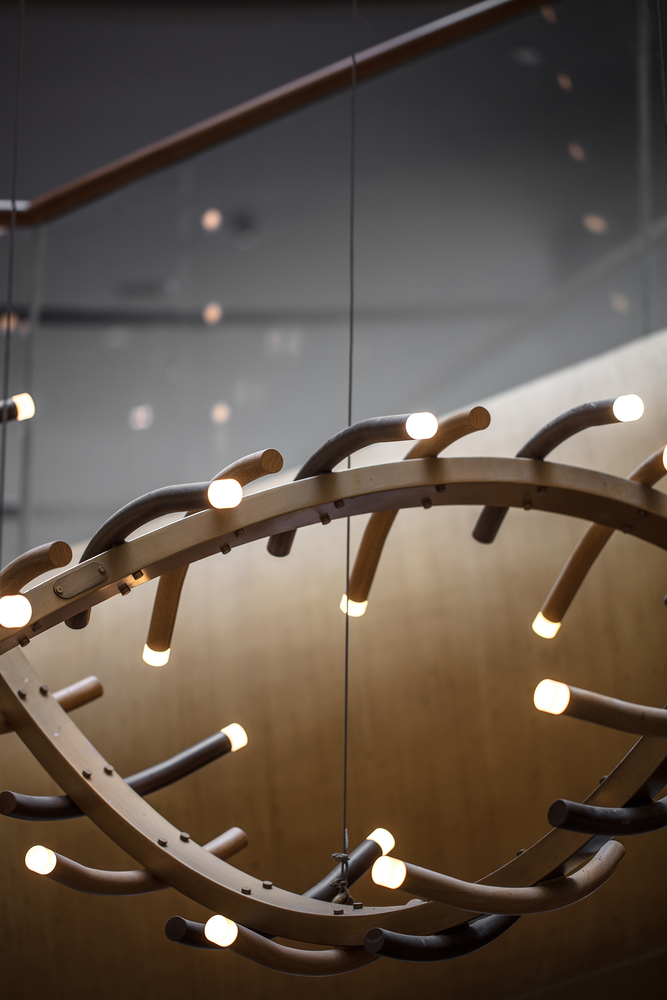
A custom chandelier is not a scaled-up standard fitting. Ceiling reinforcement, suspension point and void depth have to be resolved while the architectural drawings are still open. The specifier should state the suspension method: fixed rod, tensioned cable, or structural plate. Define the ceiling interface and any required access above the finished ceiling. If the void is tight, the design must be engineered to your void rather than drawn around a decorative assumption.
The point load must be confirmed with the structural engineer before the ceiling build-up is fixed. If the chandelier is suspended from a tensioned cable, the angle and terminations need to be drawn in section. If it is fixed to a structural plate, the plate size and bolt layout become part of the architectural package. These details are rarely visible, but they determine whether the approved visual can actually be installed.
Material Choices Are Production Choices
Cut and pressed crystal are not interchangeable at this scale. The difference between cut and pressed material affects weight, brightness and the way the piece survives transport. A custom chandelier in crystal requires the maker to set the armature first, then map the strand lengths and connection points before the crystal elements are cut. This is why we treat crystal chandelier production as an assembly sequence, not a simple fixture selection.
The armature is the hidden metal frame that carries the crystal. It is usually built first because the crystal is cut to fit the frame, not the reverse. The maker should produce a marked-up frame drawing with every suspension point. That drawing becomes the reference for the crystal schedule, the wiring route and the site assembly sequence.
Density, Finish and Visual Weight
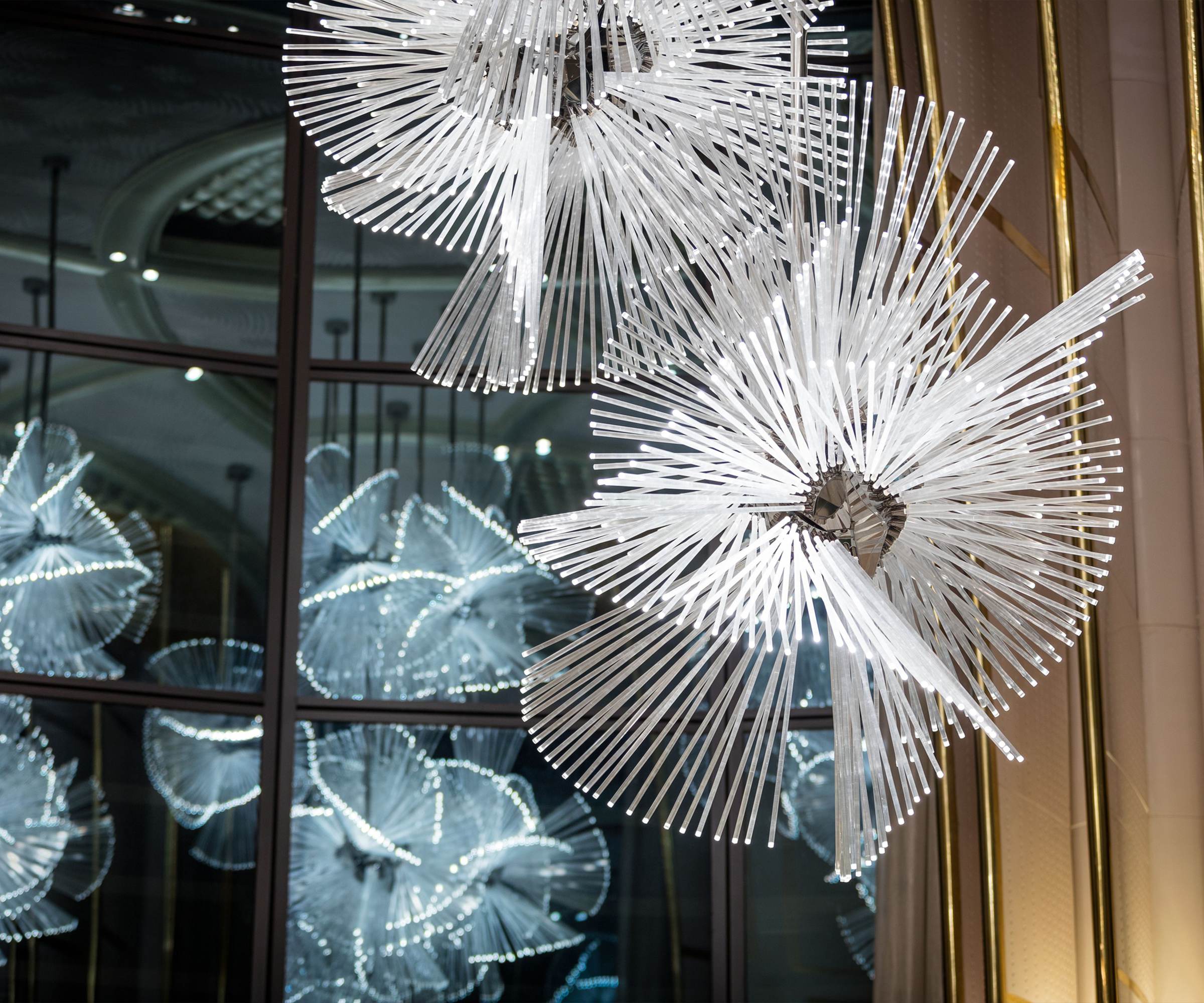
Density is decided by the ratio of decorative material to open air. A heavily filled centre reads as a solid element; a sparse arrangement reads as a line drawing. The same armature can produce either effect. Finishes also need to be fixed for each visible element: the body, the chain or rod, the ceiling canopy, and the interior surfaces that catch light. For a custom chandelier, every finish note should be tied to a sample or physical reference, not a verbal description.
The specification sheet should separate the following decisions:
- Overall span and drop, tied to the ceiling and sight lines
- Density of crystal across the armature
- Finish for every visible metal surface
- Lamping strategy and any dimming interface
- Access method for relamping and cleaning
The most useful specification lists each decision only once. The more precise this list, the fewer substitutions later. When a drawing leaves these points open, the factory must make assumptions, and those assumptions become change orders. A clear custom lighting brief closes that gap before metal is cut.
Service Access Is Part of the Design
A chandelier that cannot be relamped or cleaned without scaffolding in a finished lobby becomes an operating cost. The specification should describe how the fitting lowers, hinges, or allows access from above. Driver placement, cable terminations and any concealed maintenance grip should be drawn, not assumed. For international projects, the packing method matters as much as the structure itself. EPE foam and a wooden crate protect a custom chandelier through multiple handling stages, but only if the maker has planned how the components separate for site reassembly.
Freight is not a packaging afterthought. A custom chandelier is usually shipped in components and reassembled on site. The maker should mark each segment, provide a reassembly drawing, and pack the breakable elements so they cannot shift inside the crate. For sea freight, movement inside the crate is the main cause of damage, not the outer impact.
SHUCHUANG makes each custom chandelier to order in its own metal workshop, with no minimum order for custom work. The workshop builds the metal structure, cuts and assembles the decorative material, and prepares the piece for site conditions. Drawings and quotations are prepared from the specifier’s sketches or marked-up sections.